∞ I have been a passionate paddler most of my life and for some reason I am attracted to paddling rivers and have done little paddling on other bodies of water like lakes or ponds. I did spend eight years on the Singapore American Dragonboat team competing on the Singapore Strait and Marina Bay. My wife and I make an annual habit of spending a couple of months each winter in Naples FL and so it seemed like I was overdue for a Florida overnight paddle trip. The closest interesting body of water to Naples is the Florida Everglades. I had explored the Everglades many times with fishing guides, but I had never paddled in the Everglades.
Human habitation in the southern portion of the Florida peninsula dates to 15,000 years ago. British surveyor John Gerard de Brahm, who mapped the coast of Florida in 1773, called the area “River Glades”. The name “Everglades” first appeared on a map in 1823. Everglades National Park protects the southern twenty percent of the original Everglades. The park is the largest tropical wilderness in the United States and the largest wilderness of any kind east of the Mississippi River. An average of one million people visit the park each year. Everglades is the third-largest national park in the contiguous United States after Death Valley and Yellowstone. It became a national park in 1947 and a World Heritage Site in 1979.
Camping in the Everglades brought to mind creatures I don’t have little experience with–pythons, alligators and crocodiles. The Everglades is the only place where both American alligators and the very rare American crocodiles coexist in the wild. I needed to get smarter on the Everglades before I organized an overnight trip so I started reading Exploring Everglades National Park and the Surrounding Area by Roger Hammer. He explains how Southern Florida only recently became a tourist paradise. While engaged in the Second Seminole War in 1837, Jacob Rhett Motte wrote in his diary, “The Indians said they could not live a month without suffering and in the summer not at all. It is in fact the most hideous region to live in, a perfect paradise for Indians, alligators, serpents, frogs and every kind of loathsome reptile.”
The last time I had a guide on a canoe trip was when I was a teenager at summer camp in Northern Wisconsin. Knowing little about the Everglades I decided to hire a guide for this trip. I found Everglades Adventures in Everglades City which offers a 3 day 2 night paddling trip through the Ten Thousand Islands. We decided to do this on January 30 through February 1, 2026.
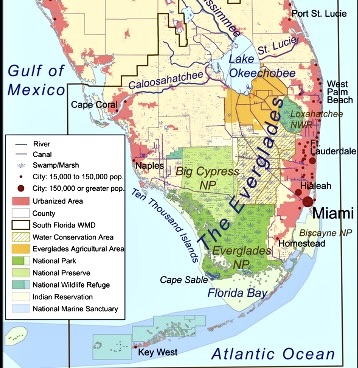
The Ten Thousand Islands are a chain of spits of land and mangrove islets off the coast of southwest Florida. Some of the islands are high spots on a submerged coastline and others were produced by mangroves growing on oyster bars. Despite the name, the islands only number in the hundreds.
Everglades City is the main access to the Ten Thousand Islands. Everglades City has a long, well-documented history of law breaking. When drugs flooded South Florida in the 1970s and 1980s, many of the local residents took to marijuana smuggling. The dense mangrove islands surrounding the area and its remote location provided a perfect environment for marijuana smugglers to drop their bales, known as “square groupers.” Local fishermen—who knew how to navigate the shallow waterways—were hired to smuggle marijuana from Jamaica and South and Central America. In a federal operation known as Operation Everglades, nearly 300 residents (approximately 80% of the adult male population at the time) were arrested for their involvement in a massive marijuana smuggling ring. Tons of pot, along with cars, boats, and other property were seized. The Miami News quoted an unidentified resident as saying, “There are two expressions that no one uses in Everglades City anymore. One is ‘This town is going to pot.’ The second is, “We are waiting for our ship to come in.’”
First Day – Plan Continuation Bias
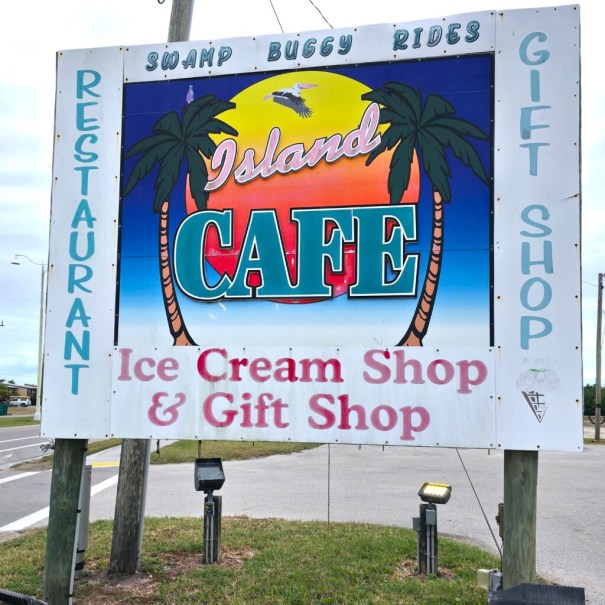
My son John and I met for breakfast at the Island Café in Everglades City. John and I have done many paddling trips together. In his 1982 travelogue Blue Highways, the author William Least Heat-Moon describes his system for evaluating the quality of diners based on the number of wall calendars hanging in them. At the Island Café I only saw one wall calendar which according to Heat Moon would translate to “preprocessed food.” I had the grouper and grits, and John had the Fisherman’s Breakfast. I would rate the food as 3 calendars – “Guaranteed good farm-boy breakfasts”. See the Appendix for Heat Moon’s diner rating system.
On most paddle trips, I keep a close eye on the weather for weeks in advance. An unusual Arctic cold front was expected to hit southern Florida on the days of our trip. The forecast was for good weather on Friday, then Saturday the temperature dropping midday and the wind picking up. Sunday would be cold (high 30’s) but sunny. I grew up in Wisconsin and our family spent four cold years in Beijing so the weather forecast didn’t bother me much. The National Park Service issued a warning of “Adverse Weather and hazardous boating conditions” which is not exactly what a paddler likes to see starting off a trip.
Fresh in my mind were thoughts from an article I recently read in Paddling magazine titled “Quitters Live Longer” by Alex Matthews. He says, “Get-there-itis happens when our original goal blinds us to new information, making us ignore better choices as they arise.” Psychologists call this plan continuation bias.
John and I met the guide, Alec, at the launch mid-morning and we suddenly had new information regarding our trip–gale force winds, nine foot waves and chilly temperatures.
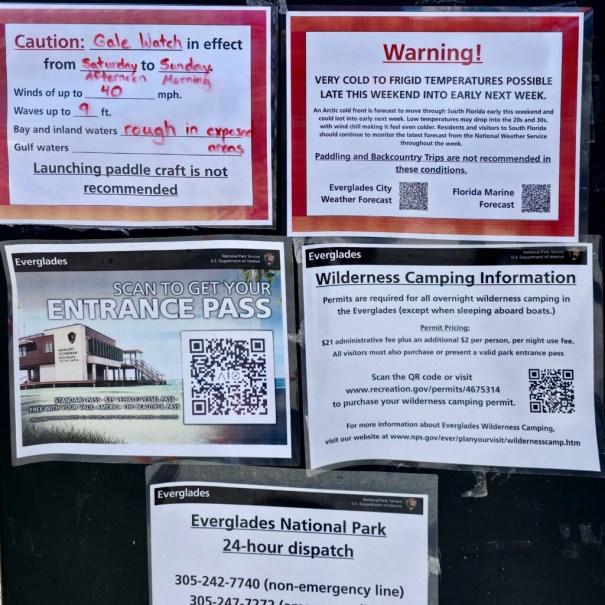
A friendly Park Service employee came out to alert us about the conditons and inquire whether we had planned appropriately. Alec assured her he knew safe paths to our campsite and we would be on the leeside of the islands. We had known Alec for all of thirty minutes.
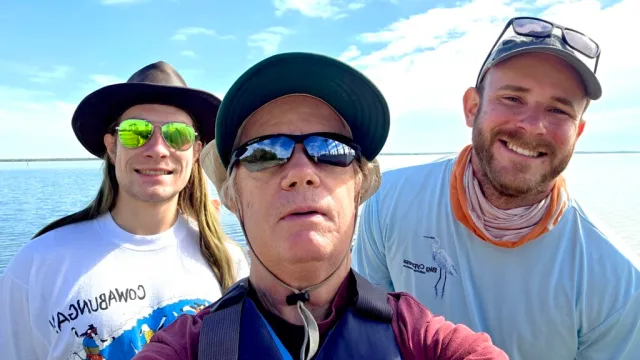
John, Jim, Alec
Alec has a degree in outdoor hospitality and has been guiding in the area for several years. Perhaps it was our “plan continuation bias”, but we put our futures in the hands of Alec and began loading our gear.
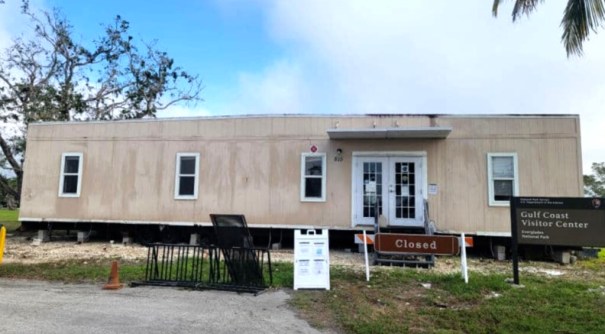
Our starting point was near the Gulf Coast Visitor Center. The original Center was destroyed by Hurricane Irma in 2017. The temporary replacement was leveled by Hurricane Ian in 2022. This is a picture of the old center.
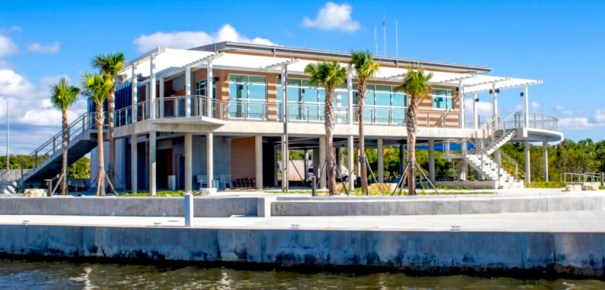
The new Marjory Stoneman Douglas Visitor Center opened in 2026.
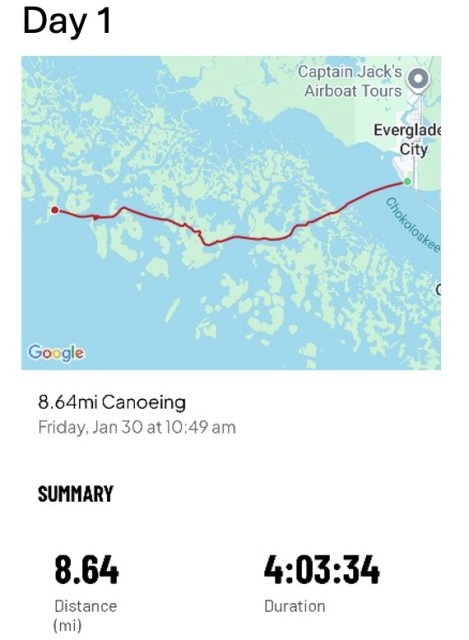
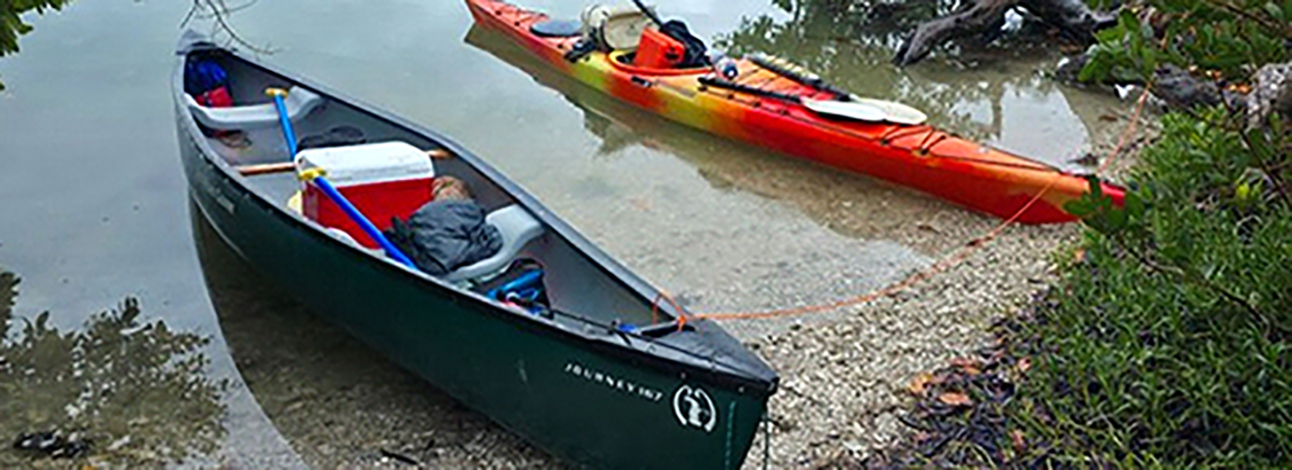
With Alec in a kayak and John and I in a canoe, we started out at 10:30am. The time was chosen to make sure most of our paddling would be done with a slack tide. We learned quite a bit about tidal paddling during our trip.
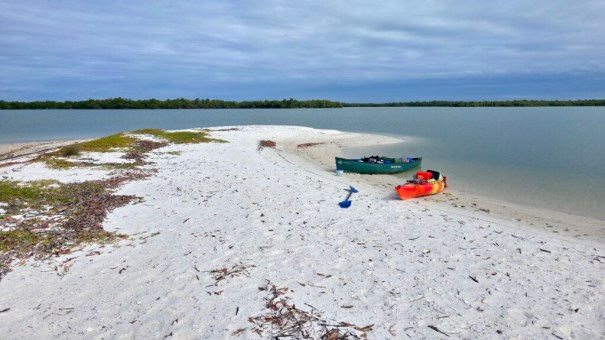
We stopped for lunch at Tiger Key, one of the ten designated camping areas in the Ten Thousand Islands Refuge. As is our custom, I spent the lunch break fishing (not catching) while John went off island exploring.
Alec had a wealth of local knowledge. We found raccoon (or racoon) tracks all over the island. Raccoons are omnivores, using their sensitive paws to “feel” for their varied diet. Raccoons are major predators of turtle eggs, frequently destroying nests shortly after eggs are laid. As opportunistic omnivores, they dig up nests, destroying up to 80% of them in some areas. This predation is a primary cause of high egg and hatchling mortality.
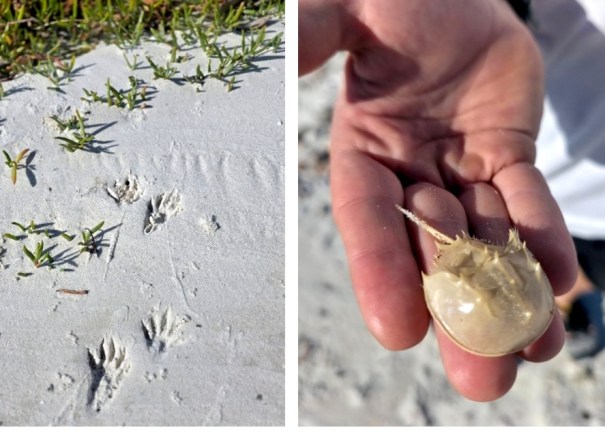
The plant next to the raccoon tracks is Common Purslane, a nutritious, edible succulent often considered a weed. It has a slightly sour, salty, crunchy taste, similar to spinach or watercress, and can be eaten raw in salads or cooked in soups and stews. It’s exceptionally rich in omega-3 fatty acids, vitamins (A, C, E), and minerals, making it a superfood. We all had a taste. I decided I would add it to my diet only if necessary.
John found a small Atlantic horseshoe crab shell. Despite the name, horseshoe crabs are more closely related to arachnids like spiders and scorpions than they are to crabs. Every year, about 10% of the horseshoe crab breeding population dies when rough surf flips them onto their backs, a position from which they often cannot right themselves, so beachgoers are encouraged to turn them back over.
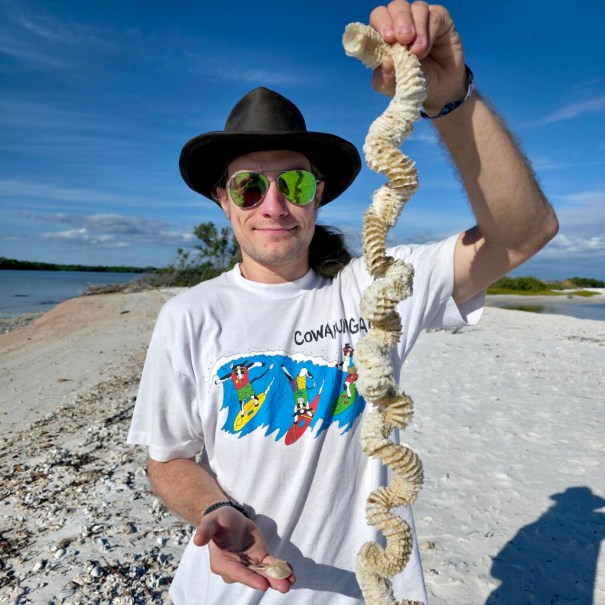
John found a whelk egg case on the beach. Whelks are similar to conchs. Conchs are typically tropical, herbivorous snails with thicker shells while whelks are temperate-water, carnivorous predators with thinner shells. Whelk egg cases, sometimes called “mermaid’s necklaces” are long, papery, spiral-shaped strings of disc-shaped capsules, often found washed up on beaches. Each capsule holds dozens of developing eggs, which hatch as miniature, fully formed whelks.
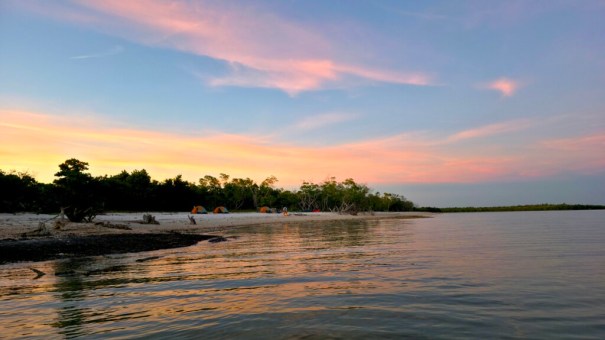
After lunch we paddled for another hour to Camp Lulu Key where we pitched our tents on the beach. John went exploring and I tried to catch our supper. I landed several ladyfish (not great eating) and then a keeper pompano, a real delicacy. Soon I brought in a hardhead catfish which is considered an inedible nuisance. After some discussion, we decided to cook it. It had a sort of liver taste and each of us decided it was an experiment we would not repeat.
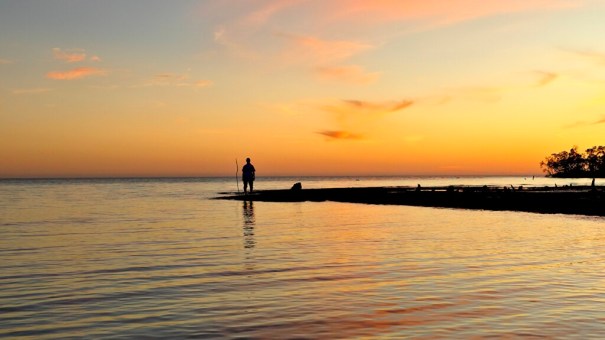
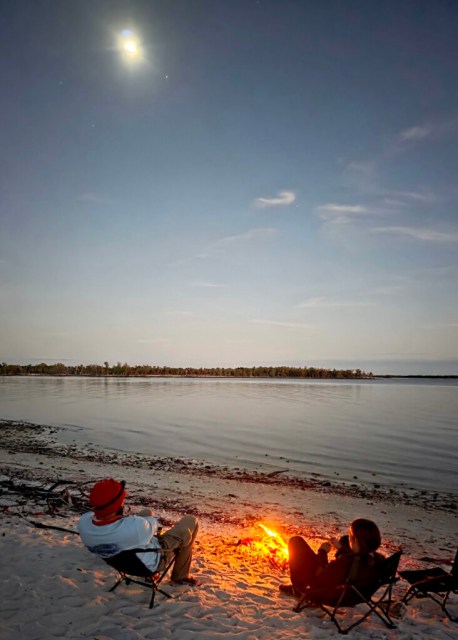
We were treated to a beautiful sunset and a clear sky to enjoy the full moon. Ten Thousand Islands archipelago is one of the remaining dark sky sites in coastal Southwest Florida. The pristine nature and low south latitude make the area a unique spot for stargazing and Milky Way astrophotography.
Changing Tides, Changing Weather
The next morning the full moon and a northerly wind created an extremely low tide.
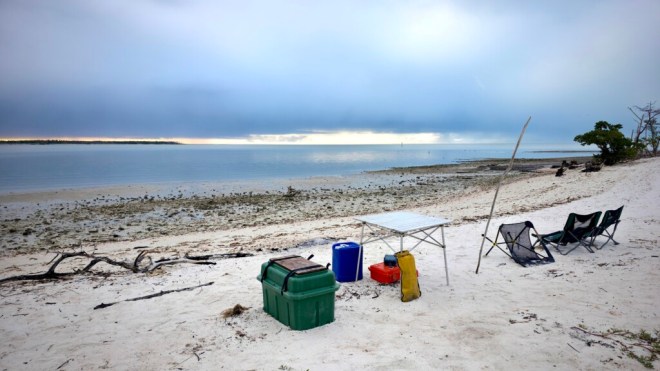
Alec stored our food in his tent overnight so the raccoons would not mess with it. We didn’t hear them during the night, but our chairs were covered with raccoon prints. The weather was still pleasant, but we knew it was not going to last.
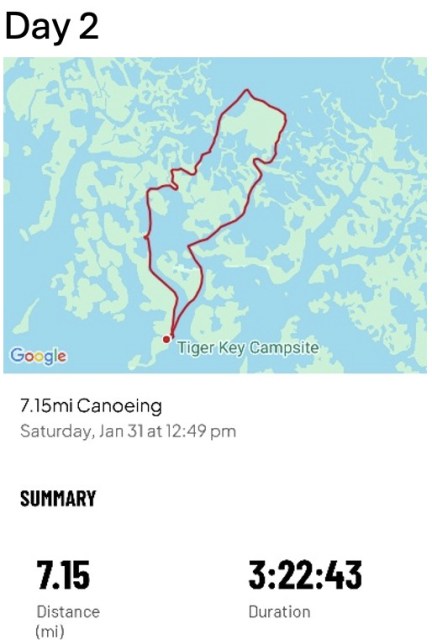
I have trouble sitting still for long, so I was eager to get on the water. A big lesson from this trip was our paddling plans all depend on the direction of the tide. It seemed to me like a great time to get on the water but we had an incoming tide. Alec explained the best approach was to wait until slack tide. If we set off now, we would have to paddle against the incoming tide on the way back. If we waited, we could ride the incoming tide to our destination island, do some exploring, and then ride the outgoing tide back to our camp. We had a few hours to wait so John and I explored the island.
After lunch, and the change of tide, we headed for Fakahatchee Island, several miles to the north. Fakahatchee Island has the remains of a midden used by the Calusa native people. A midden is a prehistoric refuse heap consisting of oyster shells, bones, and discarded tools. The island was settled by local Everglades families in the late 1800’s and it was a thriving fishing community from the late 1920s to the 1940s, large enough to support its own schoolhouse. By 1950 only a few families remained and now the island is uninhabited.
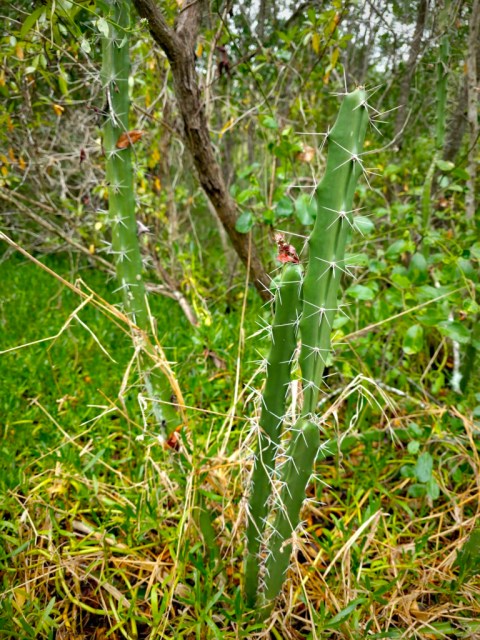
We landed at a small beach, the island’s only access. Alec pointed out the interesting vegetation on the island. This is Acanthocereus tetragonus. Common names include barbed cactus and triangle cactus. Young stems of the cactus can be cooked or eaten raw. It is sometimes planted as a living fence. The barbed cactus is native to the coastal hammocks and sandy coastal habitats of central and southern Florida.
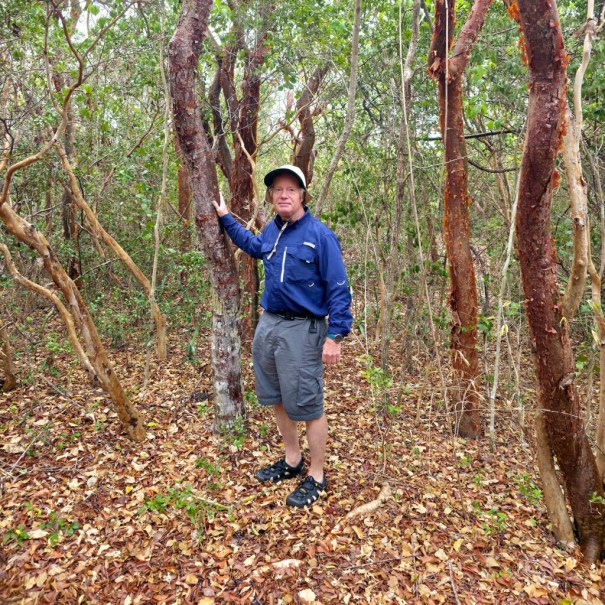
I’m standing by a Gumbo Limbo. In Florida, the tree is known by the common name, the tourist tree, because the tree’s bark is red and peeling, like the skin of the sunburnt tourists who are common in the plant’s range.
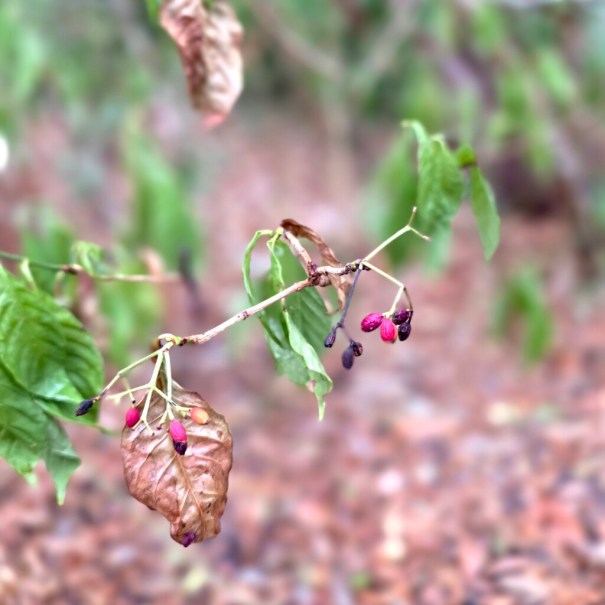
Wild coffee, a native shrub found in the Everglades and throughout South Florida. It produces small, red berries that resemble coffee beans and attract wildlife. It contains no caffeine.
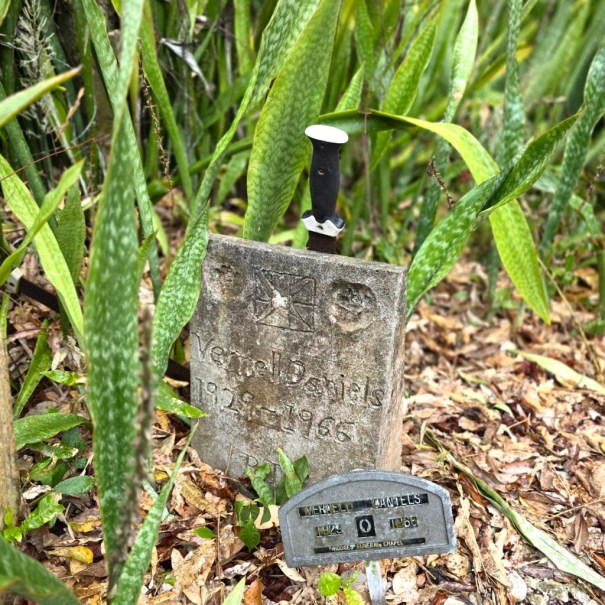
Snake plants surround a tombstone in a small cemetery. These plants re invasive and nearly indestructible. Any part of the plant can regenerate new growth. [Trivia: The famous painting by Grant Wood, American Gothic, has a snake plant on the porch behind the farm couple.]
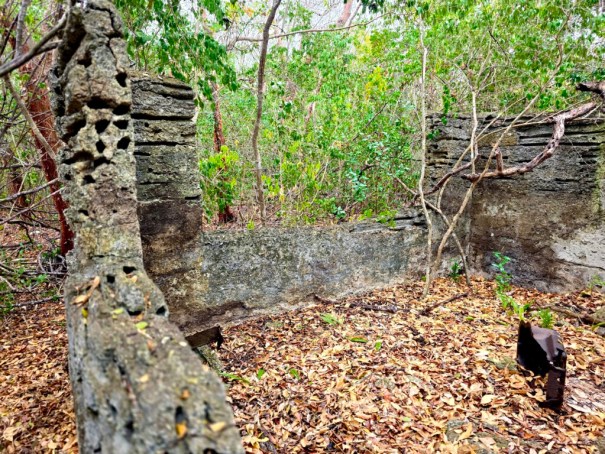
The island still has remnants from when it was settled, a building foundation and a large water cistern. We were having fun exploring but we knew the weather was going to change at any point. In early afternoon the wind went from calm to strong gusts in an instant. We raced to our boats and rode the whitecaps and the tide back to camp. I was in the front of the canoe and I hardly had to paddle. I did some fishing and caught a handful of fish including several small sea trout.
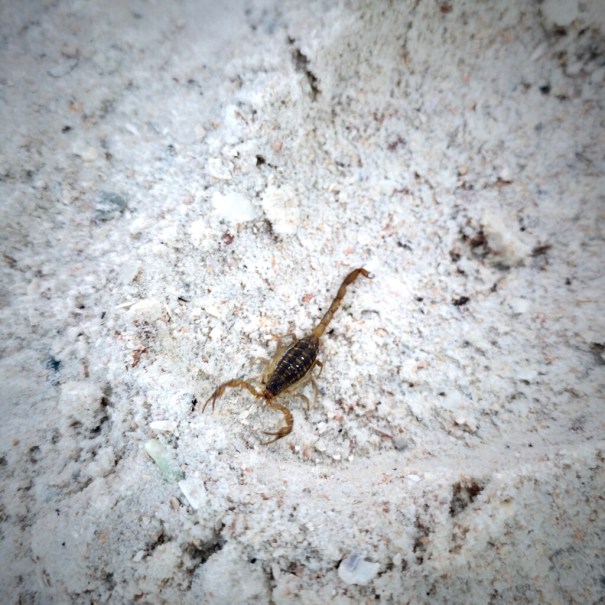
Back at our campsite, we were getting settled around the campfire when Alex shouted, “Look out!” A scorpion was very close to my feet. Florida has a variety of venomous scorpions but their stings are rarely fatal to humans, resulting instead in the pain, swelling, and irritation comparable to a wasp sting. Alec enticed the scorpion to a stick and released it down the beach.
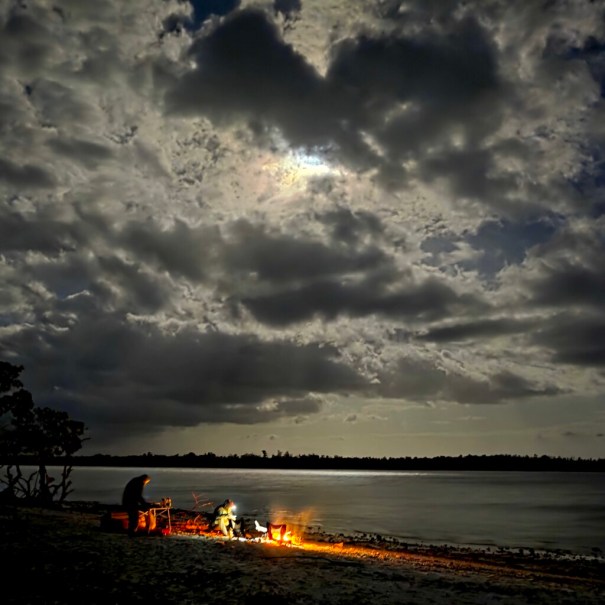
As Alec prepared a meal of shrimp and pasta, the temperature dropped, and the wind strengthened, gusting to 30-40 mph. As we huddled around the fire, John shouted, “Dad, your tent is blowing down the beach.” My gear was stored inside the tent for ballast but the winds were strong. I have done quite a bit of camping in my day, but this has never happened to me. We raced down the beach and grabbed my tent and secured it more tightly. Once this was done, I decided to call it a night, partly because I was worried my tent might blow off again.
I was getting my gear organized when I heard Alec and John chasing after John’s runaway tent. It was hard to sleep with the wind blasting against the tent. Nighttime bathroom breaks were kept short with temps in the upper 30s and a howling wind. I slept with three layers of clothes and a hat. John did the same and added gloves. We were warm enough, but it was a night to remember. Despite growing up in Wisconsin, the coldest night I spent camping was an evening in the Everglades.
Mangroves and Skunk-Apes
By morning the wind had quieted down, and the sun was out, making the weather tolerable. The tide was coming in so it was time to get on the water. We had oatmeal for breakfast and quickly broke camp. A visitor came by looking for food scraps as we departed.
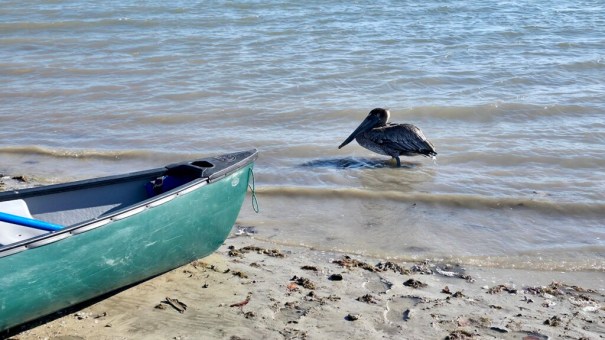
The tidal flows get very strong in narrow areas where the mangrove islands are close to each other. It is hard to tell from this picture but the current is so strong that in places it feels like you are paddling down a river with class 1 rapids.
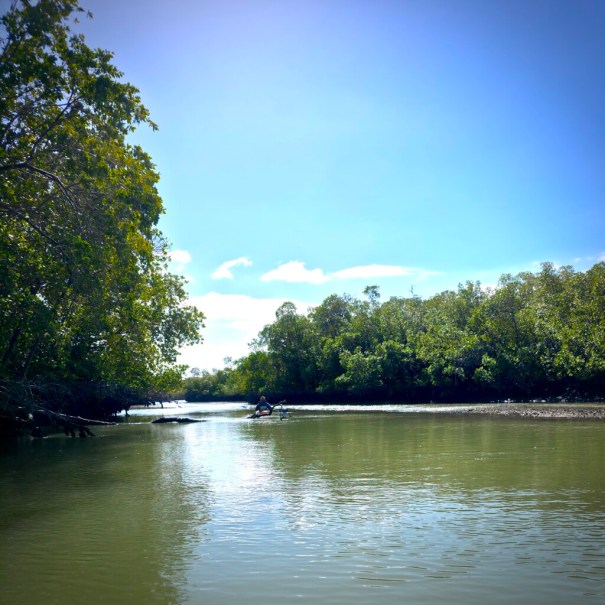
Mangrove trees are well adapted to the transitional zone where fresh and salt water meet. Mangrove forests cover much of the 200,000 acres of the Ten Thousand Islands.
There are red, black, and white species of mangroves. All three are hardy, growing in oxygen-poor soil and tolerant of salt, brackish and fresh water. Mangrove trees are integral to coastline protection during severe storms. Everglades mangroves serve as nurseries for crustaceans and fish, and rookeries for birds. The region supports the pink shrimp and stone crab industries. Between 80 and 90 percent of commercially harvested crustacean species in Florida’s salt waters spend time near the Everglades.
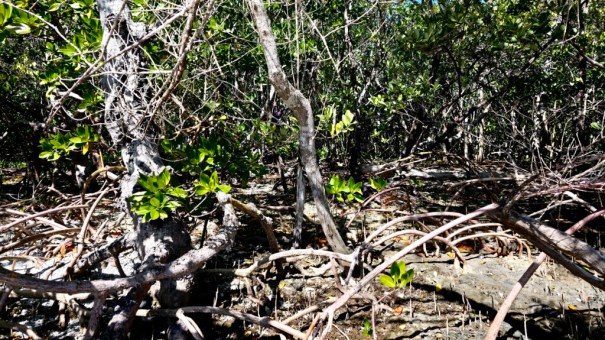
The mangroves are incredibly dense. I marveled at how hundreds of years ago indigenous people could traverse the thicket. On a rest break, John went exploring and once he was five feet inside the mangrove I couldn’t see him.
Most national parks preserve unique geographic features. Everglades National Park was the first park created to protect a fragile ecosystem. The park is the most significant breeding ground for tropical wading birds in North America and contains the largest mangrove ecosystem in the Western Hemisphere. Thirty-six threatened or protected species inhabit the park, including the Florida panther, the American crocodile, and the West Indian manatee, along with 350 species of birds, 300 species of fresh and saltwater fish, 40 species of mammals, and 50 species of reptiles. If you are into birding, this area is paradise.
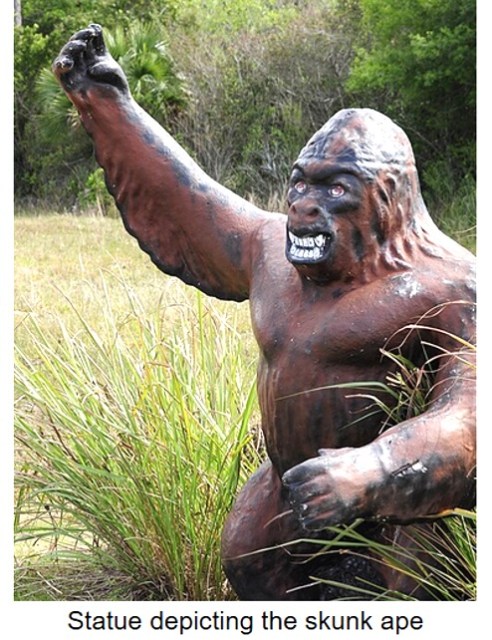
One mammal we didn’t see was a skunk-ape. The mythical skunk-ape is a large and hairy human-like creature purported to inhabit the swamps in southeastern Florida. It is often called the “cousin” of Bigfoot. In 1977, a Florida legislative bill was proposed to make it illegal to “take, possess, harm or molest anthropoids or humanoid animals.”
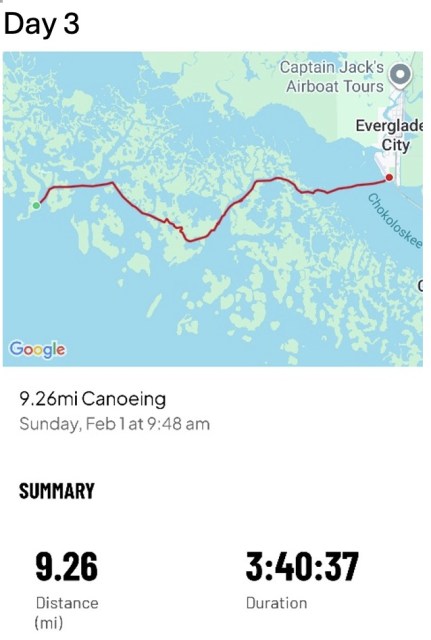
On our return trip we had a strong tailwind, the whitecaps really kicking up. Along with the incoming tide, we made good time, getting back to Everglades City by early afternoon. We decided to buy some stone crabs for lunch.
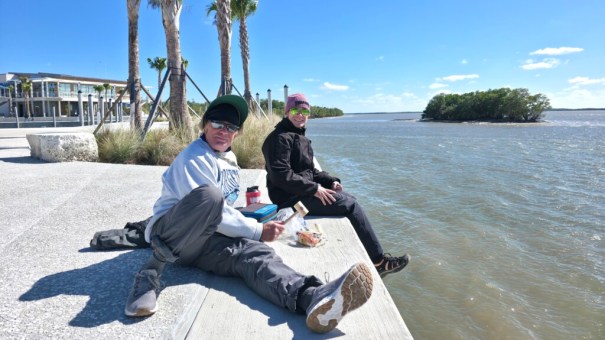
Everglades City is the Florida Stone Crab capital of the world. The bodies of these crabs are relatively small and so are rarely eaten, but the claws, which are large and strong enough to break an oyster’s shell, are considered a delicacy. Harvesting is accomplished by removing one or both from the live animal and returning it to the ocean where the limbs regrow. To be kept, claws must be 2 7/8th inches long. Florida stone crabs are legal for harvest from October 15 until May 15 and the catch varies from year to year, ranging between 2.0 and 3.5 million claws.
If you want a taste of the 19th Century, be sure to visit the Rod and Gun Club in Everglades City. The Club is a living monument to a Gilded Age. From the outside, the Club looks like an old white lodge, but once inside, you’re suddenly enveloped in a time-warp. The building dates back to William Smith Allen, the first settler who came here in 1864. In 1922, a wealthy rancher and landowner named Collier purchased the site and operated the club as a private playhouse for his rich friends and acquaintances.
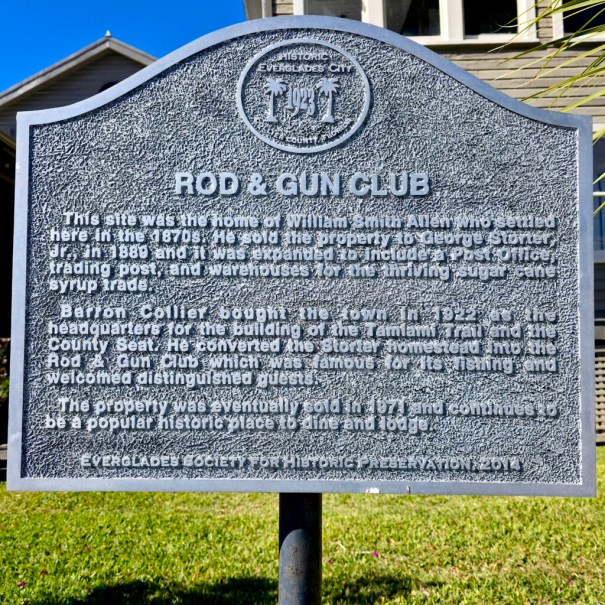
Five presidents, from Harry Truman to Richard Nixon, enjoyed its luxuries and opportunities for both fishing and shooting. Ernest Hemingway moored his fishing boat Pilar here, en-route to catch a 1,000-pound Blue Marlin. Go inside to enjoy the food and drinks and soak up history.
An Introduction to the Everglades
Despite adverse weather we had a great trip. The wind and cold added to the sense of adventure. I’ve never camped when the temps were in the 30s nor had my tent blown away from me. We saw a couple of fishing boats during our three days on the water, but no other paddlers. Alec was a very capable guide and great cook. He knew little about us but felt confident we could handle the conditions and enjoy the experience. This is a great trip for paddlers wanting to get a taste of Everglades paddling.
If you want a bigger bite of the Everglades–a longer, more involved excursion–consider the 99-mile Everglades Wilderness Waterway. The Everglades ecosystem is unique and makes for a very memorable paddle.
This was one instance where trip continuation bias turned out to have a rewarding result.
∞∞∞∞∞∞∞
Resources
Exploring Everglades National Park and the Surrounding Area by Robert Hammer (2025) –
This is a good general guide to the Everglades area. It is not a paddling-focused book though some pages mention paddling routes.
-The Everglades – River of Grass by Marjory Stoneman Douglas (1947)
Anyone considering paddling in the Everglades owes it to themselves to buy a copy of this book. The Everglades: River of Grass is a seminal book that redefined the Everglades as a vital, free-flowing river ecosystem, not a worthless swamp. It sparked the modern conservation movement for the region. Published the same year as the Everglades National Park was dedicated, the book was a powerful call to action that highlighted the area’s ecological importance and the threats it faced. It influenced decades of preservation efforts and remains a crucial reference for understanding the Everglades.
-Everglades Adventures Outfitters – https://evergladesadventures.com/
-In his 1982 chronicle, Blue Highways, William Least Heat-Moon describes his system for evaluating the quality of roadside diners based on the number of calendars hanging on their walls. According to his assessment, the number of calendars signifies the quality of the food:
- No calendar: Interstate pit-stop quality.
- One calendar: Preprocessed food.
- Two calendars: Only if fishing trophies are present.
- Three calendars: Guaranteed good farm-boy (and girl) breakfasts.
- Four calendars: Excellent pie.
- Five calendars: The restaurant is so good it should be franchised.
- Six+ calendars: A rare, exceptional, and memorable dining experience.
He famously noted that in his travels, he once found a “six-calendar café” in the Ozarks.
Trip Information
Day 1 – 8.64 miles
Day 2 – 7.15 miles
Day 3- 9.26 miles
Total – 25.05 miles